
Yak wool and cashmere are two of the rarest, most luxurious fibers in the world. Both come from animals that live high in the mountains, both are wonderfully soft, and both make pieces you’ll keep for years. But they behave differently — and which one is right for you depends on how you’ll wear it.
Here’s an honest comparison, from a shop that carries both.
What Is Yak Wool?
Yak wool — sometimes called khullu — is the fine downy undercoat of the Tibetan yak. Yaks live on the Tibetan Plateau at elevations up to 20,000 feet, in some of the coldest conditions on earth. Each spring, the soft undercoat is hand-combed from the animal (never sheared), which is why yak wool is one of the rarest luxury fibers in the world. Far less of it exists than cashmere.
Our yak wool is hand-combed, natural, and cashmere-soft — yet about 30% warmer than sheep’s wool.
What Is Cashmere?
Cashmere is the soft undercoat of the cashmere goat, raised in the high mountains of Mongolia and Inner Mongolia. It has defined luxury for centuries: cloud-soft, feather-light, and beautifully draping. Our cashmere is 100% pure Mongolian cashmere, ethically sourced.
At a Glance
| Yak Wool | Cashmere | |
|---|---|---|
| Softness | As soft as good cashmere; a little more structure | The softest at its finest grade; lighter drape |
| Warmth | Warmer — about 30% warmer than sheep’s wool | Very warm, but less insulating in extreme cold |
| Durability | Excellent — resists pilling, keeps its shape, lasts 10–20 years | Delicate — pills more, needs gentle handling |
| Care | Easy — gentle machine wash on cold | More care — hand wash or dry clean |
| Breathability | Excellent — nearly twice as breathable | Good |
| Sustainability | Very sustainable — hand-combed, low-impact grazing, extremely rare | Sustainable when ethically sourced; goats can overgraze if herds grow too large |
| Price | Between high-quality wool and cashmere | The pricier classic |
Softness
Cashmere wins on pure softness at its very finest — the best cashmere fibers measure around 14 microns. Yak wool averages about 17.5 microns, which puts it on par with good-quality cashmere. In real life, both feel beautifully soft against the skin. The difference is that yak wool has a little more body and structure, while cashmere feels lighter and drapes more fluidly.
Warmth
Yak wool is the warmer of the two. Yaks live higher and colder than cashmere goats, and their undercoat evolved to match — it’s about 30% warmer than sheep’s wool, with a natural crimp that traps air and holds heat without bulk. Cashmere is very warm too, but yak wool is the one to reach for in real cold.
Durability
This is where yak wool pulls ahead. Its crimped fibers stretch and spring back, so a yak wool piece keeps its shape at the cuffs and elbows and resists pilling far better than cashmere. A well-made yak wool piece can last 10–20 years and often feels better with age. Cashmere is more delicate — it pills more easily and can lose its shape if it gets wet, which is why so many cashmere sweaters shrink in the wash.
Care
Yak wool is the low-maintenance luxury. Most yak wool pieces can be machine washed on a gentle cold cycle. Cashmere needs more attention — hand washing or dry cleaning — and careful handling when wet.
Sustainability and Rarity
Both fibers are natural and renewable, but yak wool is the rarer and gentler of the two. Yaks are hand-combed, graze lightly, and produce far less fiber worldwide than cashmere goats — which makes genuine yak wool one of the most exclusive fibers you can buy. Cashmere is sustainable when it’s ethically sourced from well-managed herds, which is how ours is.
Which Should You Choose?
- Choose yak wool if you want the warmest, hardest-wearing piece — something for cold weather, travel, or everyday wear that you’ll reach for again and again. Our yak wool head warmer is a great place to start.
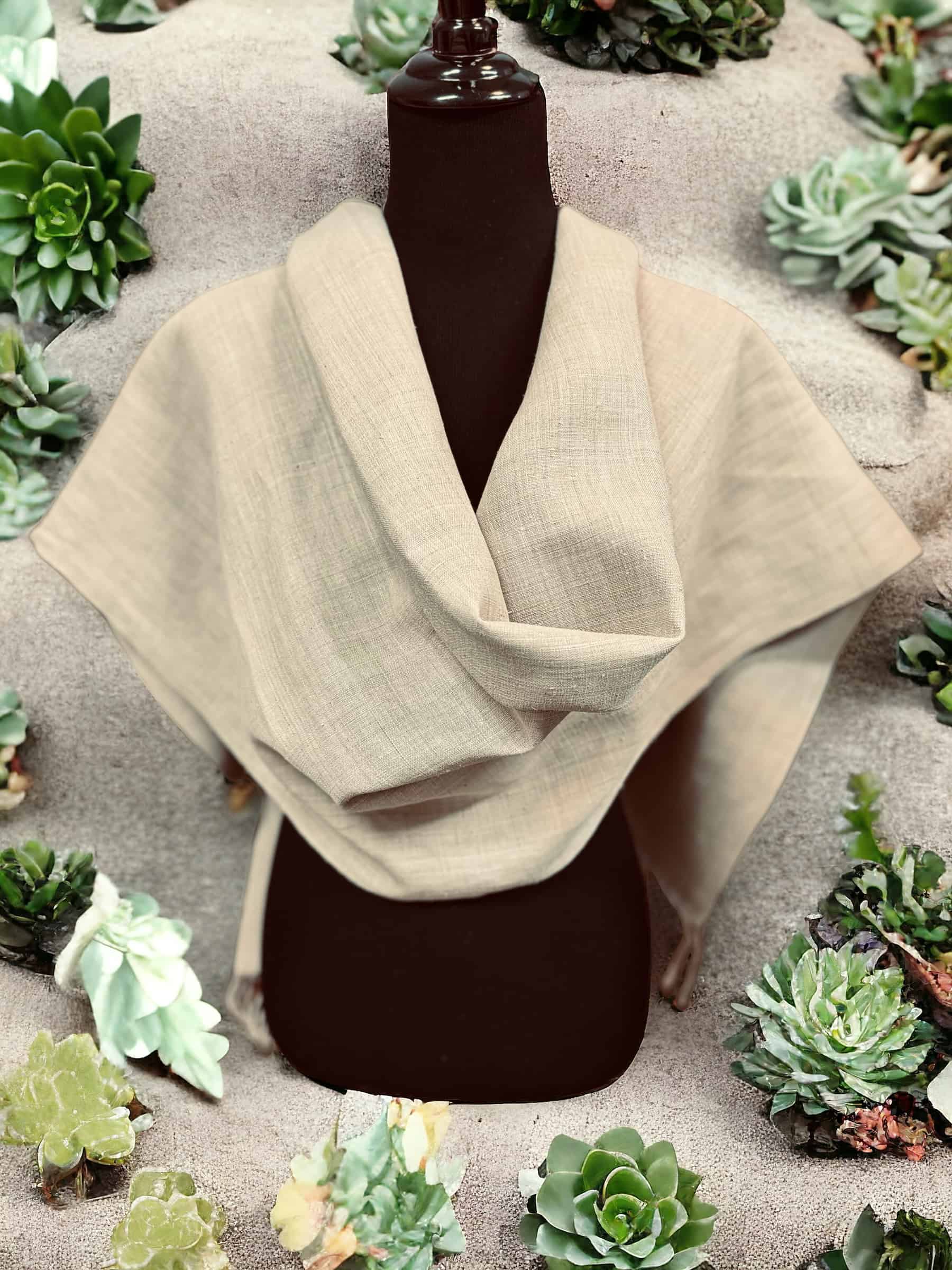
- Choose cashmere if you want the softest, lightest, most classic luxury — a feather-light scarf or wrap that drapes beautifully and feels like a cloud.
- Can’t decide? Many of our customers own both — cashmere for the lightest, most elegant layer, and yak wool for the warmest, most practical one.
Either way, you’re choosing a rare, natural fiber made to last. That’s the point.
Leave A Comment